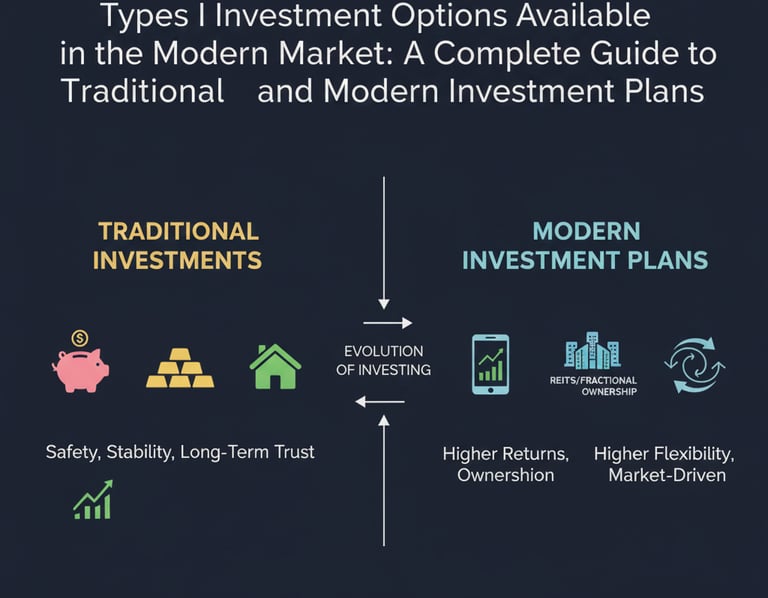
Types of Investment Options Available in the Market
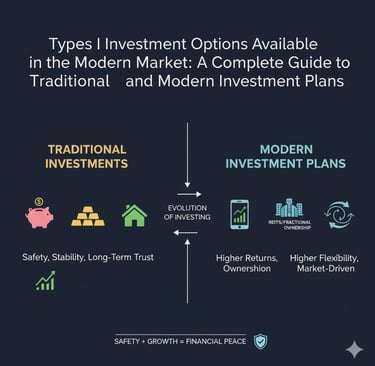
Investment planning has evolved significantly over the years. Earlier, people relied mainly on traditional and safe investment options like fixed deposits, gold, and land. Today, the modern financial market offers a wide range of innovative investment plans that provide flexibility, higher returns, and better liquidity.
flixahdevelopers
12/26/20253 min read
Types of Investment Options Available in the Market
Investment planning has evolved significantly over the years. Earlier, people relied mainly on traditional and safe investment options like fixed deposits, gold, and land. Today, the modern financial market offers a wide range of innovative investment plans that provide flexibility, higher returns, and better liquidity.
To build wealth and ensure financial security, it is important to understand both traditional investment options and modern investment plans. Each serves a different purpose depending on risk appetite, time horizon, and financial goals.
This blog explains old investment options first, followed by modern investment plans (highlighted separately), so you can make informed decisions.
Traditional Investment Options (Old & Time-Tested)
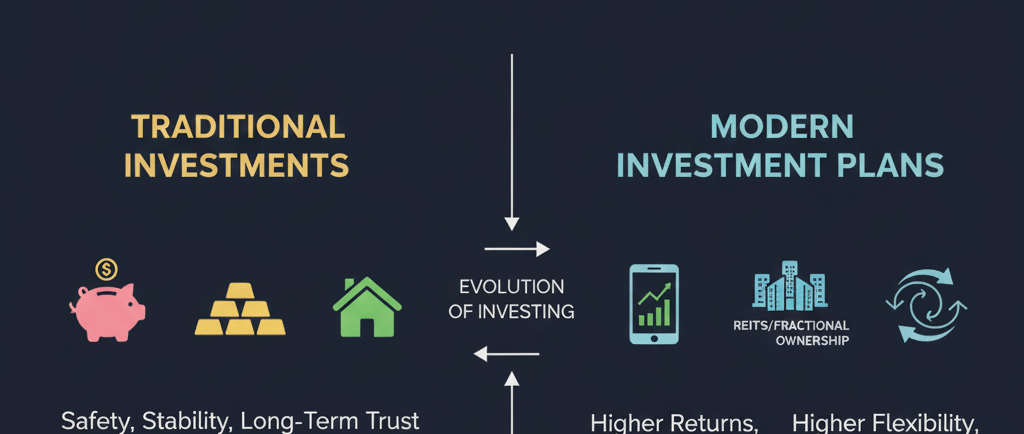
Traditional investments are known for safety, stability, and long-term trust. These options are still relevant, especially for conservative investors.
1. Fixed Deposits (FDs)
Fixed Deposits are one of the most popular traditional investment options.
Key Features:
Guaranteed returns
Fixed interest rate
Low risk
Offered by banks and post offices
Best for:
People looking for capital protection and steady returns.
Limitation:
Returns often fail to beat inflation over the long term.
2. Recurring Deposits (RDs)
Recurring Deposits allow investors to save a fixed amount monthly.
Key Features:
Disciplined saving
Low risk
Fixed returns
Best for:
Low-income or first-time investors.
3. Public Provident Fund (PPF)
PPF is a government-backed long-term savings scheme.
Key Features:
High safety
Tax benefits
Long-term wealth creation
Best for:
Long-term investors who prefer secure and tax-efficient investments.
4. Gold (Physical Gold)
Gold has been a trusted investment for centuries.
Key Features:
Hedge against inflation
High emotional and cultural value
Easy liquidity
Limitations:
No regular income
Storage and safety concerns
5. Real Estate (Land and Property)
Real estate has always been considered a strong long-term investment.
Key Features:
Capital appreciation
Rental income
Physical asset ownership
Why it remains powerful:
Land value generally increases over time, and property can generate monthly income after construction.
6. Insurance-Based Savings Plans
Traditional life insurance policies combine savings with insurance.
Key Features:
Guaranteed maturity value
Life cover
Low risk
Limitation:
Returns are usually lower compared to other investment options.
Modern Investment Plans (New-Age & Market-Driven)
Modern investment plans are designed to provide higher returns, flexibility, and convenience, especially for today’s fast-paced lifestyle.
🔹 Modern investment plans are underlined below 🔹
1. Systematic Investment Plan (SIP)
SIP allows investors to invest a fixed amount regularly in mutual funds.
Key Features:
Low starting amount
Power of compounding
Disciplined investing
Market-linked returns
Best for:
Long-term wealth creation for salaried and middle-income individuals.
2. Mutual Funds
Mutual funds pool money from investors and invest in equity, debt, or a mix of both.
Types include:
Equity funds
Debt funds
Hybrid funds
Advantages:
Professional fund management
Diversification
Liquidity
Risk:
Market-linked and subject to fluctuations.
3. Index Funds
Index funds track major market indices.
Key Features:
Low cost
Stable long-term performance
Lower risk compared to active equity funds
Best for:
Investors who want steady growth with minimal involvement.
4. National Pension System (NPS)
NPS is a retirement-focused investment plan regulated by the government.
Key Features:
Long-term pension planning
Equity and debt exposure
Tax benefits
Monthly pension after retirement
Best for:
People planning retirement income systematically.
5. Exchange Traded Funds (ETFs)
ETFs are market-traded funds that track assets like equity, gold, or bonds.
Advantages:
Low expense ratio
High liquidity
Transparency
6. Real Estate Investment Trusts (REITs)
REITs allow investors to invest in commercial real estate without buying property.
Key Features:
Regular income through dividends
Lower investment amount
Liquidity
Best for:
Those who want real estate exposure with smaller capital.
7. Fractional Real Estate Investment
This is a modern concept where multiple investors jointly invest in high-value commercial properties.
Key Features:
Low entry cost
Rental income
Professional property management
8. Sovereign Gold Bonds (SGBs)
SGBs are government-backed gold investments.
Benefits:
Gold price appreciation
Fixed annual interest
No storage issues
9. Digital Investment Platforms
Mobile apps and online platforms now allow easy access to investing.
Key Features:
Paperless process
Real-time tracking
Easy SIP setup
10. Systematic Withdrawal Plan (SWP)
SWP allows investors to withdraw a fixed amount regularly from mutual funds.
Best for:
Retired individuals looking for monthly income.
Traditional vs Modern Investment Options: A Comparison
AspectTraditional OptionsModern Investment PlansRiskLowMedium to HighReturnsStableHigher (Market-linked)LiquidityLow to MediumHighFlexibilityLimitedVery HighTechnologyOfflineDigital & App-based
How to Choose the Right Investment Mix
The smartest approach is not choosing one, but combining both traditional and modern investments.
A balanced portfolio may include:
Traditional investments for safety (FD, PPF, Real Estate)
Modern plans for growth (SIP, Mutual Funds, NPS)
Income-generating assets for retirement (Rental Property, REITs, SWP)
Final Conclusion
The modern investment market offers a wide variety of options that suit different financial goals. While traditional investment options provide safety and stability, modern investment plans offer growth, flexibility, and convenience.
To build long-term wealth and financial peace:
Use traditional investments for security
Use modern investment plans for faster growth
Focus on long-term goals like retirement and passive income
A thoughtful mix of both old and modern investment options is the key to a strong and stress-free financial future.
for more info on real estate investment please visit our website flixahdeveloperspvtltd.com or you can also reach us at +91 9100600730