
Why Real Estate Will Outperform Stocks in 2026
The debate between real estate and stock market investing has been going on for decades. While both asset classes offer opportunities for wealth creation, market experts predict that real estate is strongly positioned to outperform stocks in 2026. With rising housing demand, infrastructure expansion, stable rental income, and increasing investor confidence, real estate in India is entering one of its most promising phases.
flixahdevelopers
11/21/20254 min read
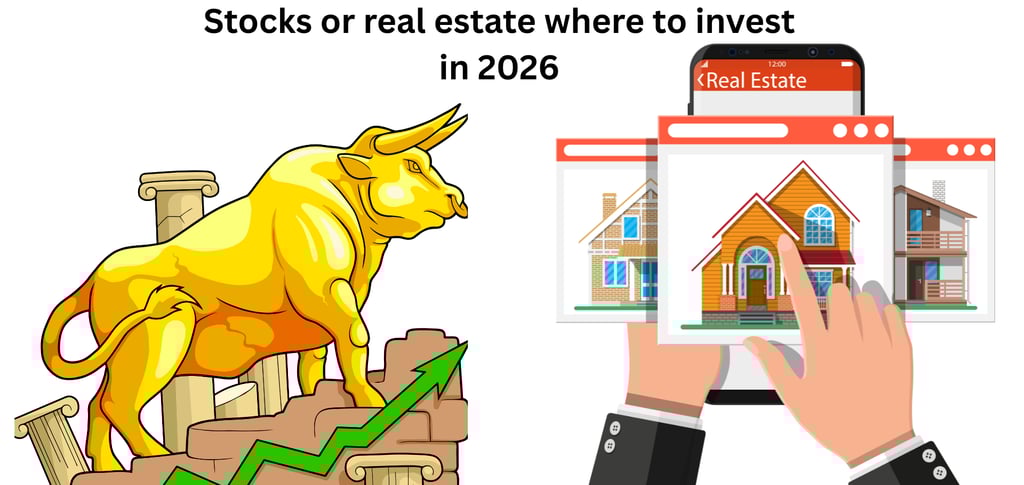
Why Real Estate Will Outperform Stocks in 2026
The debate between real estate and stock market investing has been going on for decades. While both asset classes offer opportunities for wealth creation, market experts predict that real estate is strongly positioned to outperform stocks in 2026. With rising housing demand, infrastructure expansion, stable rental income, and increasing investor confidence, real estate in India is entering one of its most promising phases.
At the same time, the stock market—though capable of high returns—faces volatility, global uncertainty, and unpredictable earnings cycles that make it less stable for many investors. In this article, we explore the reasons why real estate is expected to become a superior investment choice in 2026.
1. Real Estate Demand Continues to Rise in 2026
India’s real estate sector has entered a growth cycle that is expected to accelerate through 2026. The demand for:
Residential flats
Villa communities
Gated community plots
Commercial office spaces
Warehouses
Retail units
is increasing across Tier 1 and Tier 2 cities.
Why demand is rising:
Migration towards major IT hubs like Hyderabad, Bengaluru, Pune, and Chennai
Strong job creation in tech, pharma, and manufacturing
Massive infrastructure development (metros, expressways, airports)
Rising incomes and better eligibility for home loans
In contrast, the stock market demand is heavily influenced by foreign investment, global interest rates, and geopolitical risks — factors outside the control of Indian investors.
2. Stability During Volatility
The stock market in 2026 continues to face:
Global recession fears
Inflationary pressures
Fluctuating interest rates
Unstable foreign institutional inflows
Unpredictable corporate earnings
These factors create short-term turbulence that can significantly reduce equity returns.
Real estate, on the other hand, is inherently stable.
Even during economic slowdowns, people continue to need housing. Demand may slow, but it never collapses. This makes real estate a low-volatility, high-security investment compared to equities.
3. Consistent Rental Income (Even During Downturns)
One of the biggest advantages of real estate is that it generates steady monthly income through rent.
In 2026, rental demand is booming due to:
Growth of IT corridors
Rising migration to metro cities
Increase in nuclear families
Growth of co-living spaces
More students shifting to urban education hubs
While stocks only provide dividends occasionally—and often unpredictably—real estate gives investors regular cash flow, making it ideal for:
EMI repayment
Passive income
Retirement planning
Long-term stability
4. Appreciation + Cash Flow = Double Benefit
Stock market returns come only from capital appreciation, unless a company pays dividends.
Real estate gives you two sources of returns:
✔️ 1. Cash Flow (Monthly Rent)
✔️ 2. Capital Appreciation Over Time
In high-growth cities like Hyderabad, Bengaluru, and Pune, property values are rising steadily due to:
New infrastructure projects
Development of IT and pharma hubs
Demand for modern residential communities
Scarcity of land in urban areas
This dual advantage allows real estate to outperform stocks in total long-term wealth creation.
5. Protection Against Inflation
Real estate is one of the best inflation-proof investments.
When inflation rises:
Property prices increase
Construction costs rise
Rental income increases
Asset value appreciates
But stock markets often fall during high inflation periods because:
Corporate profits drop
Borrowing costs increase
Investor sentiment weakens
In 2026, with inflation still above average, real estate offers superior protection for investors’ money.
6. Government Policies Boosting Real Estate
The Indian government has introduced several initiatives that will continue to support real estate growth in 2026:
PM Awas Yojana (Urban & Rural)
RERA (Real Estate Regulatory Authority)
Affordable housing incentives
Infrastructure status for certain real estate sectors
New metro rail expansions
Multi-city expressways
Reduction in approval time for building projects
These policies provide transparency, lower risk, and increase investor confidence—advantages that stock markets do not enjoy.
7. Real Estate Offers Leverage: Stocks Don’t
You can invest in real estate using leverage through home loans.
Example:
Property price: ₹60 lakh
Your investment: ₹10–15 lakh (down payment)
Bank finances the rest
If the property appreciates by 20%, your total return is calculated on the full property value—not just your down payment.
Stocks do not offer such accessible, low-interest leverage.
8. Emotional & Practical Utility
Real estate is not just an investment—it's an asset you can use.
You can:
Live in it
Rent it out
Renovate it
Mortgage it for loans
Pass it to your children
Stocks offer none of these utilities.
Real estate builds generational wealth, while stocks provide only financial returns.
9. Real Estate Returns Have Outperformed Stocks Over Long Cycles
Historical data shows that over long periods (10–20 years), real estate often beats stock returns due to:
Stable appreciation
Rental income
Leverage
Low volatility
Compounding growth in urban demand
Stock markets perform in cycles—high returns during bull runs, but sharp corrections during crises.
Real estate performs steadily and predictably over long horizons.
10. Real Estate Is the Preferred Choice for Indian Investors in 2026
According to multiple market surveys in 2026:
More than 60% of Indian investors plan to invest in real estate
Only 15–20% prefer equities as their primary long-term investment
NRIs are increasing investments in residential and commercial assets
Tier 2 and Tier 3 cities are emerging as new hotspots
This shift shows strong confidence in the real estate market.
Conclusion
In 2026, real estate is positioned to outperform stocks due to:
Rising housing demand
Stable and predictable returns
Rental income + appreciation
Protection against inflation
Lower volatility
Government-backed reforms
High investor confidence
Accessible leverage through home loans
While stock markets will always be an important part of investment portfolios, real estate offers greater stability, stronger long-term returns, and dual income sources that make it the superior asset class for many investors in 2026.
If you invest wisely in the right location and asset type, real estate can become the foundation of long-term wealth, security, and financial freedom.
for more info on real estate investment please visit our website flixahdeveloperspvtltd.com and you can also reach us at +91 9100600730